
USP Big Sandy Federal Releases
United States Penitentiary Big Sandy is a high-security federal Bureau of Prisons institution at 1197 Airport Road in Inez. It holds sentenced federal prisoners and operates beside a minimum-security satellite camp. Neither unit is a Martin County jail, a Kentucky DOC prison, or part of Big Sandy Regional Detention Center. The correct release trail begins with federal records.
When the BOP Inmate Locator shows a past date and a “Released” result with no current institution, it reports that the person is no longer in BOP custody. That is an important event, but it is not a statement that every form of legal control ended. A federal judgment can impose supervised release after imprisonment. A state, county, or immigration agency may also hold the person after BOP custody closes.
| BOP result | How to read it |
|---|---|
| USP Big Sandy location | The person remains assigned within BOP custody at the penitentiary. |
| In Transit | The person is moving within federal custody, not released to the community. |
| Released with past date | BOP custody ended on the reported date. |
| No electronic result | Recheck identity and consider older records or a non-BOP federal detainee. |
How to Search a USP Big Sandy Release
Use the BOP Inmate Locator for a sentenced federal prisoner. A register number is the strongest search key because it avoids confusion between people who share a name. The name search accepts first, middle, and last name with optional age, race, and sex fields.
- Enter the BOP register number when it is known.
- Otherwise search the legal name and use identity fields to narrow the result.
- Compare name, register number, age, race, and sex before relying on the record.
- Read the location and release-date columns together.
- Treat “In Transit” as continued custody.
- For a past “Released” result, check the federal judgment for any supervised-release term.
The locator is generally the electronic path for federal inmates released after 1982. BOP provides National Archives guidance for older records. A missing result is therefore not enough, by itself, to declare that no federal imprisonment or release occurred.
The official search page shows the federal locator fields used for this process.
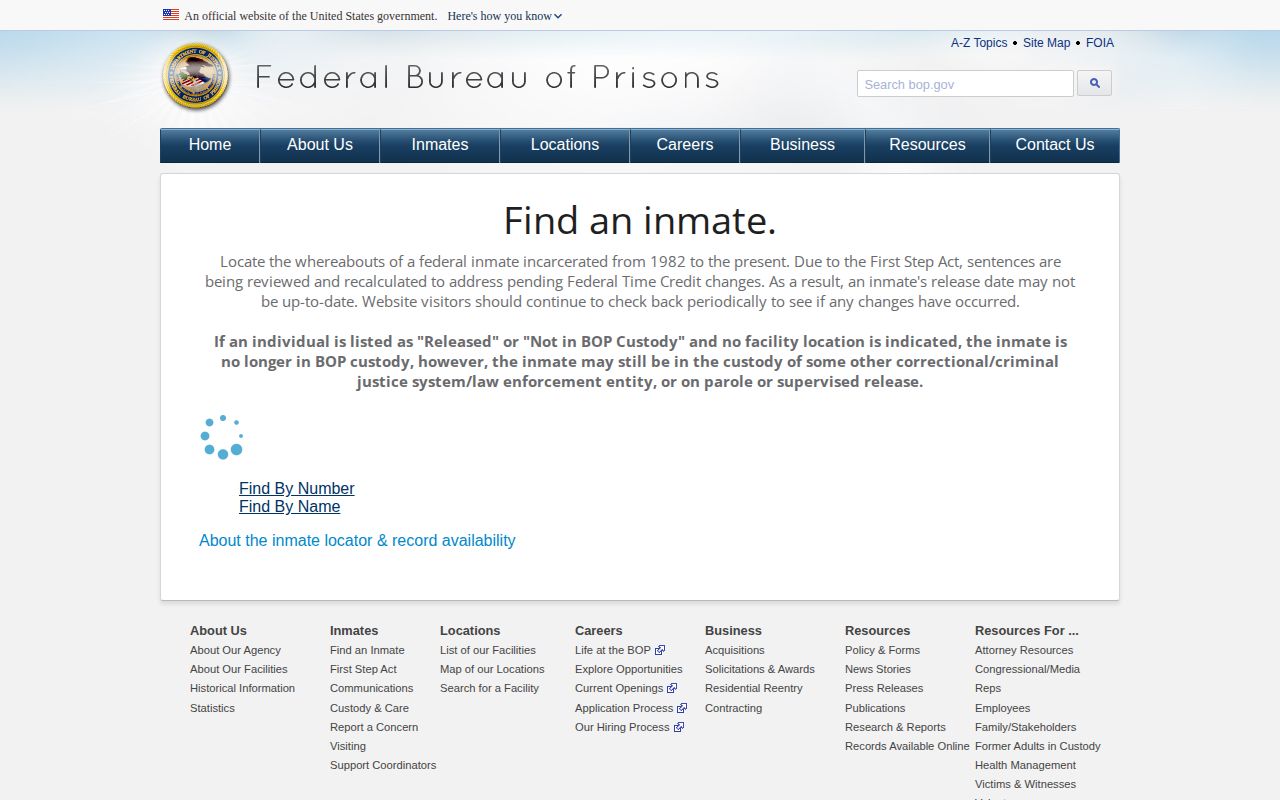
The locator's register-number route is especially useful when a common name could produce several federal records.
USP Big Sandy Release Records
The locator supplies a concise administrative result, not the complete legal history. The federal criminal docket, judgment, sentence, and later court orders explain the authority for imprisonment and any supervised-release term. A BOP release date should not be substituted for the end date of supervision. Likewise, the judgment does not replace BOP's administrative confirmation that physical custody ended.
BOP explains that locator records display name, register number, age, race, sex, release date, and location. Those fields are designed for identity and custody-location purposes. They do not publish a county-style booking sheet, arrest narrative, arrival and departure log, or complete movement history. Ask the appropriate federal office for an existing record rather than assuming a local open-records request reaches BOP material.
United States Penitentiary Big Sandy Contact
The institution's official page provides the federal complex address and main telephone number. Direct a custody-location question through BOP's locator first so staff receive the register number and exact record at issue.
The BOP facility page for Big Sandy identifies both the high-security penitentiary and its adjacent minimum-security camp.

The paired listing is useful because it confirms that the penitentiary and camp share a federal complex but remain distinct security settings.
Release, Transfer, and Supervised Release
Three events are easy to confuse. A transfer changes a person's BOP location while confinement continues. Release ends BOP custody on the date reported by the locator. Federal supervised release is a court-imposed period in the community that can begin after prison. The word “released” in a BOP result addresses the second event and does not decide the third.
Use the federal case record to identify the sentencing court and terms. A later revocation proceeding may return a person to custody. If another authority took custody on the BOP release date, search that authority's official system separately. A Kentucky state case belongs in Kentucky court and correctional records, while immigration custody belongs in ICE's system. Do not infer the next destination from the federal release date alone.
Note: A BOP past release date confirms the federal custody endpoint shown, not the end of supervision or every other hold.
Pretrial Federal Custody Near USP Big Sandy
A person charged federally may be held under the United States Marshals Service before sentence and may not yet be a BOP prisoner. The USMS does not operate a public person locator. It also does not release prisoner histories, photographs, or arrival and departure times to the public. In that situation, the federal court docket and release or detention order are the main public route.
Search the federal case by the correct defendant and court, then distinguish an order authorizing release from proof that the custodial movement occurred. A court may enter an order before processing is complete, and another case or detainer can affect the exit. Once a sentenced person enters BOP custody, the BOP register number becomes the best identifier for later location and release checks.
Why Big Sandy Names Cause Errors
Martin County has an unusual detention map. Its ordinary county detainees are commonly housed outside Martin County at Big Sandy Regional Detention Center in Paintsville. Meanwhile, the county itself contains this high-security federal prison and its satellite camp in Inez. The shared “Big Sandy” wording can send a search to the wrong agency.
For BSRDC, use the regional jail roster, VINE, and Martin court records. For USP Big Sandy, use BOP and the federal court record. For the camp, use the same federal systems while confirming that the BOP location refers to the camp rather than the penitentiary. Geography does not merge these agencies, and the Martin County Sheriff does not maintain the federal inmate record.
The official BOP explanation of locator records describes the coverage and meaning of federal results.
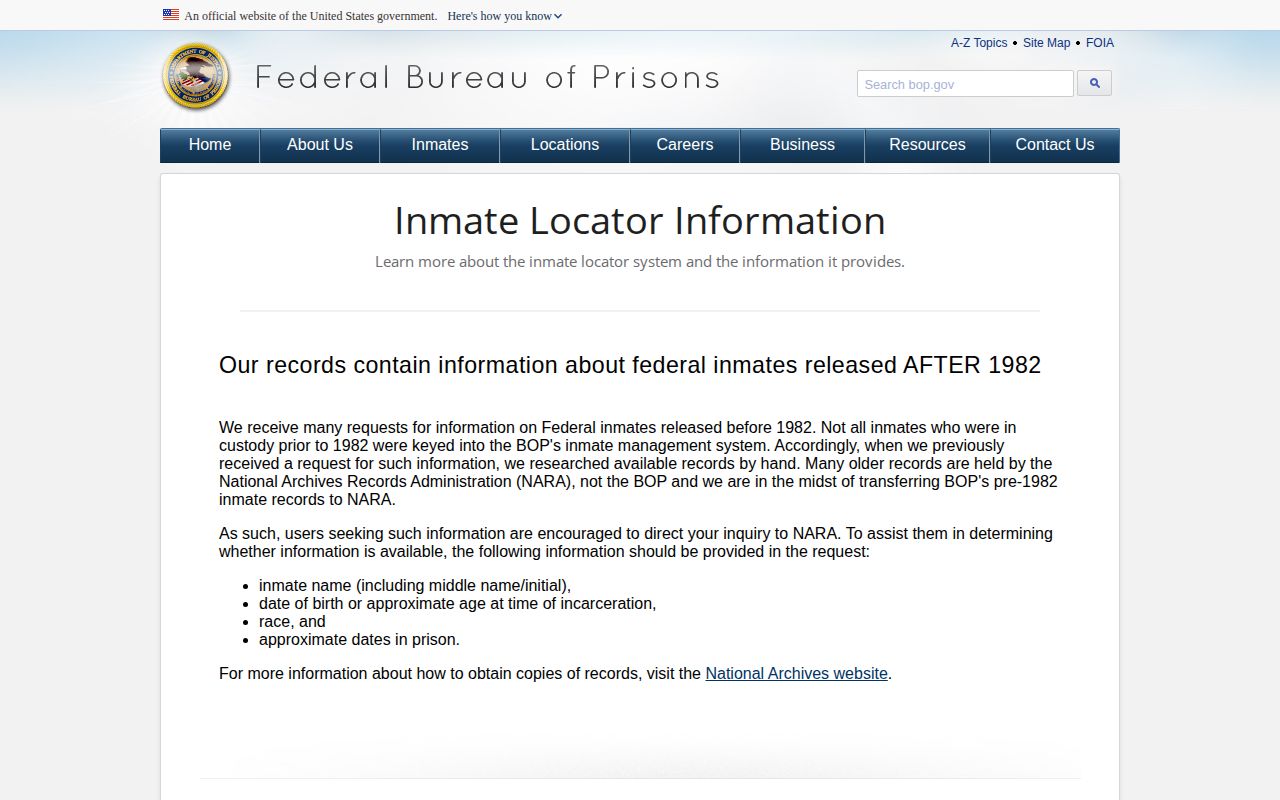
This guidance helps a reader decide when the electronic locator applies and when older archival research may be needed.
Verifying a Federal Release Date
Start with identity. Compare the register number and all displayed personal fields. Then capture the exact status, date, and date viewed. A result can change as BOP updates location or release information. Next, match the federal case and judgment without relying on the name alone. The case can reveal the sentence and supervision, but it should not be used to invent a physical-release timestamp.
If the result conflicts with another source, keep the scopes separate. BOP controls its own custody status. The court controls its orders. A probation office handles supervised release, and another jail or prison controls any later custody. The Martin County release-search guide gives a broader comparison for people whose history may cross local, state, and federal systems.
What USP Big Sandy Does Not Report
The BOP public locator is not a daily release feed for Martin County. It does not provide a list of everyone who left the institution in the last day or three days. It is a named-person search. The regional jail's current roster is also not a substitute, because it contains local detainees rather than federal prisoners.
A BOP “Released” result should be reported narrowly and with its date. Avoid claims about why the person left unless the judgment or another official federal record supplies that basis. Avoid claims that all custody ended unless checks of relevant receiving systems support them. These limits preserve the difference between a useful federal release confirmation and a conclusion the locator was never designed to make.