
USP Big Sandy Camp Releases
The satellite camp is a minimum-security federal unit operated with USP Big Sandy. Both facilities share the federal complex at 1197 Airport Road, Inez, but the camp is not simply another name for the high-security penitentiary. A careful record should preserve the location shown by BOP rather than describing every person at the complex as housed in the penitentiary.
The Bureau of Prisons controls the custody record for a sentenced federal prisoner at the camp. A locator result showing the camp or another BOP location means federal custody continues. “In Transit” also means continued custody. A result showing “Released” with a past release date identifies the reported end of BOP custody, subject to the identity and scope limits of the public record.
| Question | Official route |
|---|---|
| Is the person still in BOP custody? | BOP Inmate Locator location and status |
| When did reported BOP custody end? | Past release date on the matched locator result |
| Does supervised release follow? | Federal judgment and later court orders |
| Was the person only transferred? | Current BOP location or “In Transit” result |
| Is another agency holding the person? | That agency's official locator or custody record |
Search a Big Sandy Camp Record
Open the BOP Inmate Locator and use the register number whenever possible. A register number is tied to the federal record and is safer than matching a name alone. When no number is available, enter the person's first, middle, and last name and use the optional age, race, and sex fields to reduce namesake risk.
- Search the register number or full legal name.
- Match all available identity fields before selecting a result.
- Read the named location and release date in the same row.
- Do not treat a move to another BOP location as release.
- Record the exact wording and date viewed.
- Check the federal judgment for the sentence and any supervised-release term.
BOP electronic records generally cover federal inmates released after 1982. Its official record explanation points older inquiries toward National Archives material. A search miss may also occur because the person was a pretrial USMS detainee rather than a sentenced BOP prisoner, or because a name was entered differently.
The official locator displays the search choices used to locate a camp prisoner.
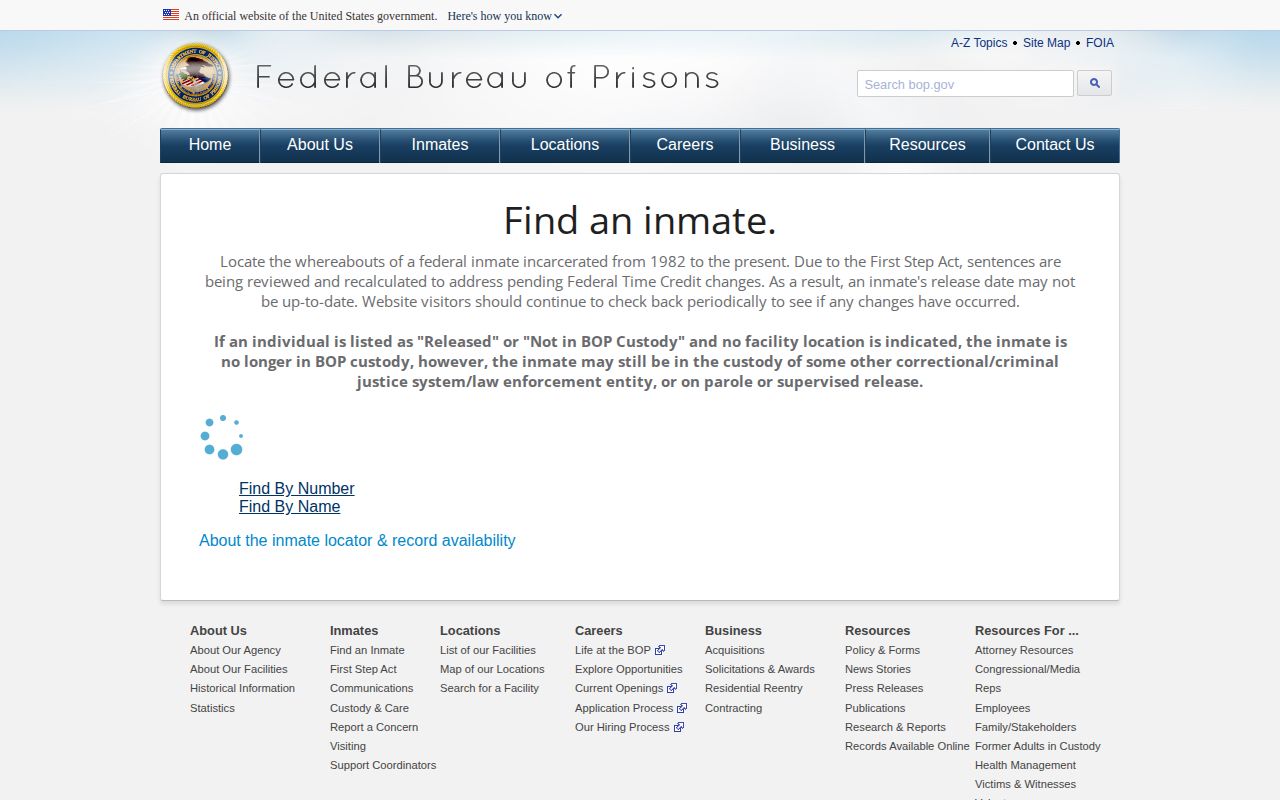
The register-number option gives the cleanest match when a family name, age, or other biographical detail is not unique.
Big Sandy Camp Contact and Identity
The BOP facility page lists the camp with the penitentiary at the same federal complex. Use the locator before calling so the inquiry includes the prisoner's register number, exact displayed location, and date viewed. This helps distinguish a camp assignment from the high-security institution or another BOP location.
The official USP Big Sandy complex page identifies the penitentiary and its satellite camp.

The shared listing confirms common administration and location while preserving the camp's separate minimum-security designation.
Camp Release Versus Federal Transfer
Leaving the camp grounds does not always equal release from BOP custody. The person may move to another institution, pass through an in-transit status, or enter another BOP-controlled placement. The public locator's current location and status should control how the movement is described. Do not convert a transfer into a community-release claim because the former camp assignment disappears.
A genuine past “Released” result marks the end of the BOP custody reflected in that record. It does not say whether a different sovereign took custody on the same day. A state warrant, local case, or immigration matter would require a separate search through the responsible agency. Ask what the source actually proves before joining records across systems.
Supervision After Big Sandy Camp Release
Federal supervised release is imposed by a court and commonly follows a prison term. It is distinct from parole and from BOP custody. The federal judgment states the term and conditions, while later docket entries may show modification or revocation. The BOP locator is not designed to display the complete supervision history.
For that reason, report two facts separately when both are supported: the date BOP custody ended and the existence of a court-ordered supervised-release term. Do not describe the person as fully discharged merely because the locator says Released. If a later federal order changes supervision, use the order rather than extrapolating from the original judgment.
Note: Release from a minimum-security camp can still begin a separate term of federal supervision in the community.
Federal Court Records for Camp Releases
The federal court record provides the legal framework that the locator omits. It can identify the sentence, supervised-release term, and later proceedings. A release or detention order is especially important for a pretrial defendant handled by the United States Marshals Service, because USMS offers no public person locator.
Keep the court's order date distinct from BOP's physical-release date and the time a public system updated. These dates may differ. The court does not operate the camp, and BOP does not decide the meaning of the judgment through its short locator entry. Using both records within their own scope avoids turning an estimate or order into a false claim about the actual exit.
USMS also does not release prisoner histories, photographs, or arrival and departure times to the public. A federal pretrial inquiry should therefore focus on the case docket and clerk rather than asking the regional jail or Kentucky DOC for federal movement records.
Martin County's Two Big Sandy Systems
The local map is easy to read backward. Martin County detainees are commonly taken to Big Sandy Regional Detention Center in Paintsville, outside Martin County. Inside Martin County are the high-security USP Big Sandy and this minimum-security camp. The shared regional name masks a firm line between county and federal custody.
A BSRDC release is followed through the regional jail, Kentucky VINE, and the Martin court file, with KOOL or another receiving system used when transfer evidence points there. A camp release is followed through BOP and the federal court record. The camp never feeds BSRDC's roster. Kentucky's KOOL system is not the federal locator. Martin County court staff do not create BOP release dates.
The BOP locator-record guide describes the federal coverage and fields.
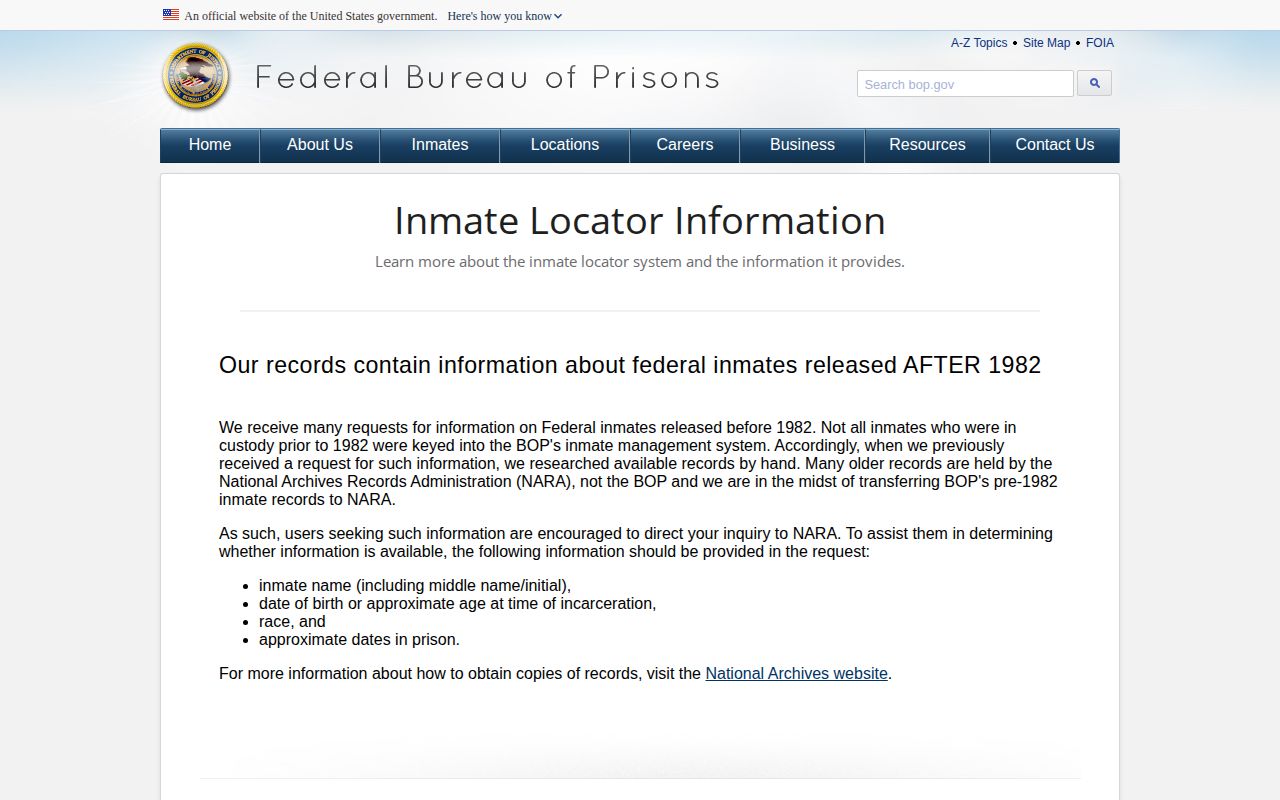
The official explanation is the best source for deciding whether an electronic federal result should exist and what its release date represents.
Resolve a Conflicting Camp Result
First verify the register number. Next compare every identity field and record the exact BOP location. If an old screenshot says the camp while the current locator says another institution, the newer result may reflect a transfer. If the current result says Released, preserve the past release date and then search the federal case for supervision.
If a local or state system lists the same person, do not assume an error. BOP custody may have ended while Kentucky or a county agency began custody. Compare identifiers and dates before concluding that the records belong to the same person. The Martin County release and custody guide explains how to separate county, state, and federal sources when a history crosses systems.
Contact BOP with the register number and exact label if a material discrepancy remains. Avoid independently calculating a federal release date from sentence length because credits, court changes, and administrative events may affect the outcome. A current official result is stronger than a private estimate.
What the Camp Locator Cannot Answer
The public locator does not state why the person was released, give a full movement log, or show every post-release obligation. It also is not a recent-release feed for the camp or Martin County. Searchers must look up a named person. Neither the 24-hour nor 72-hour county release pages should be treated as a federal camp report.
The locator can answer a narrower and valuable question: whether the matched federal record now shows a BOP location or a past release date. The federal court record can then answer what sentence and supervision the court imposed. Any later state, local, or immigration custody must be checked with that agency. This source-by-source approach is slower than reading one label, but it produces a defensible account of what the USP Big Sandy camp release record actually shows.